An example
Maintenance records at the machine.
A demo we built to show the second item on our list: each job logged against the machine it was done on, from a phone at the machine. Every machine, site, name and number in it is invented sample data. It is not a client’s system.
How it works
Four screens from the demo, in the order a technician meets them.
Scan the tag on the machine
Each machine carries a small NFC tag beside a printed code. Holding a phone to the tag opens that machine’s page, and on a phone that cannot read tags, the printed code finds the same page. The app reads only the tag’s serial number.
Our own product, captured 13/11/2026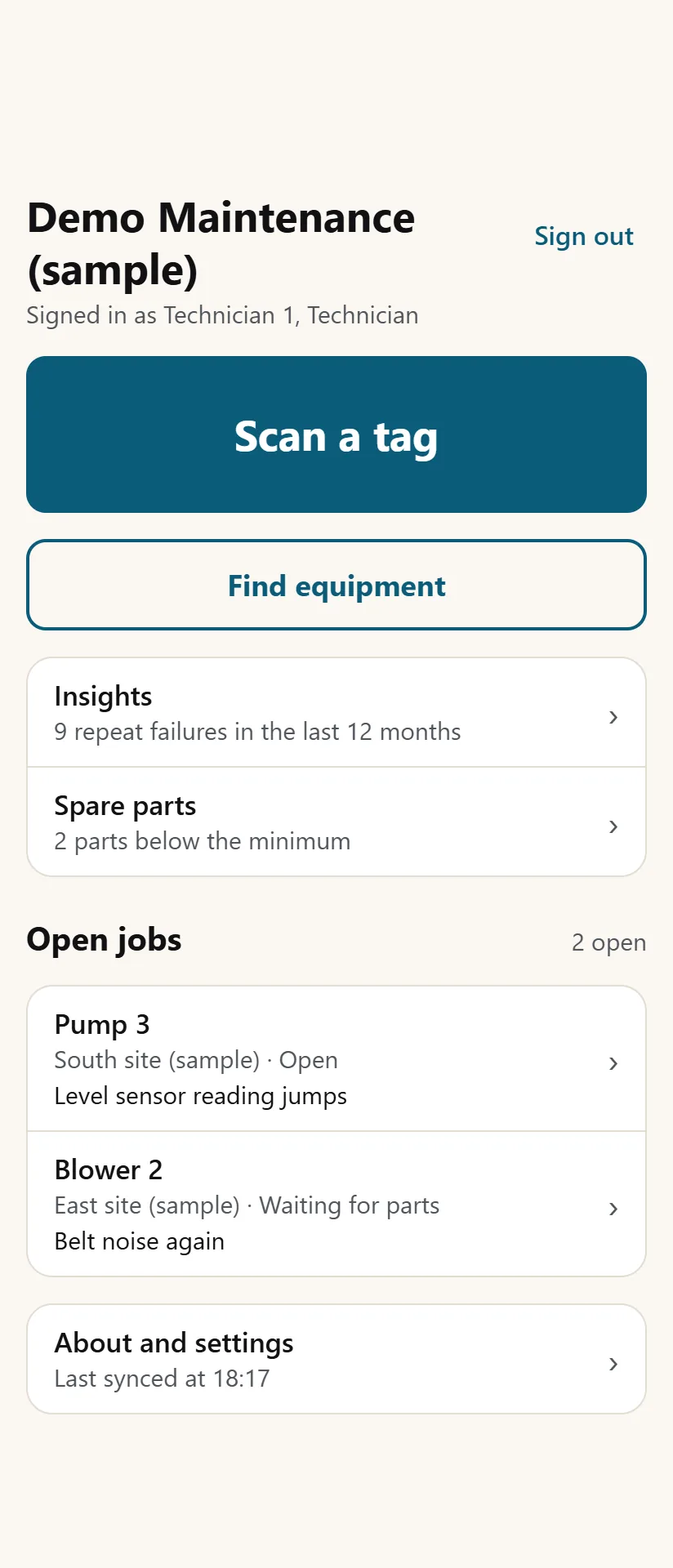
The home screen, signed in as a technician. A demo we built, on invented sample data. Not a client’s system. See what was done before
The machine’s page shows where it is, its status and every job logged against it, newest first. When the same fault keeps coming back, a note says so. That note comes from a fixed rule in the software, not from AI, and it shows the numbers it counted.
Our own product, captured 13/11/2026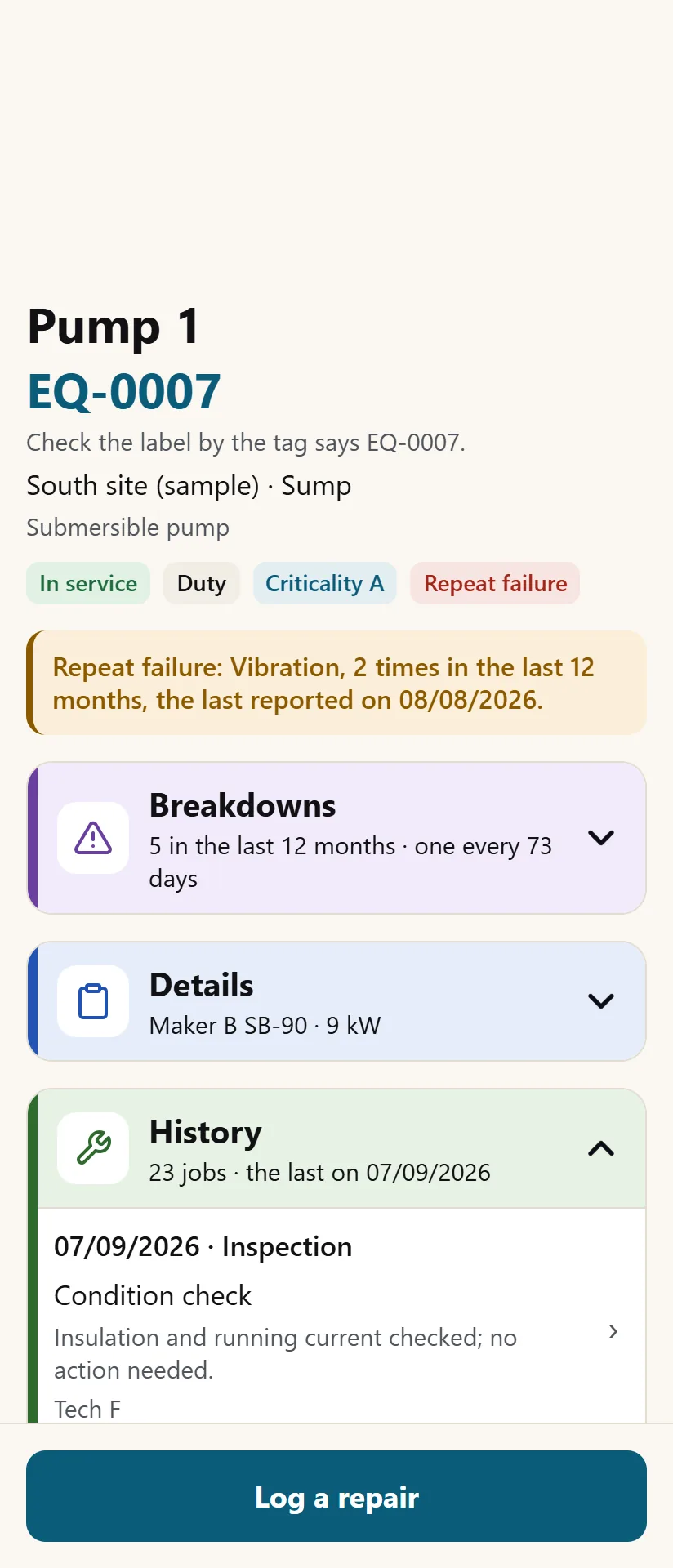
One machine’s page, with its history open. A demo we built, on invented sample data. Not a client’s system. Log the repair at the machine
The job is logged against the machine it was done on, from the phone at the machine. The common faults are buttons, so most of the form is choosing rather than typing, and there is room for a note.
Our own product, captured 13/11/2026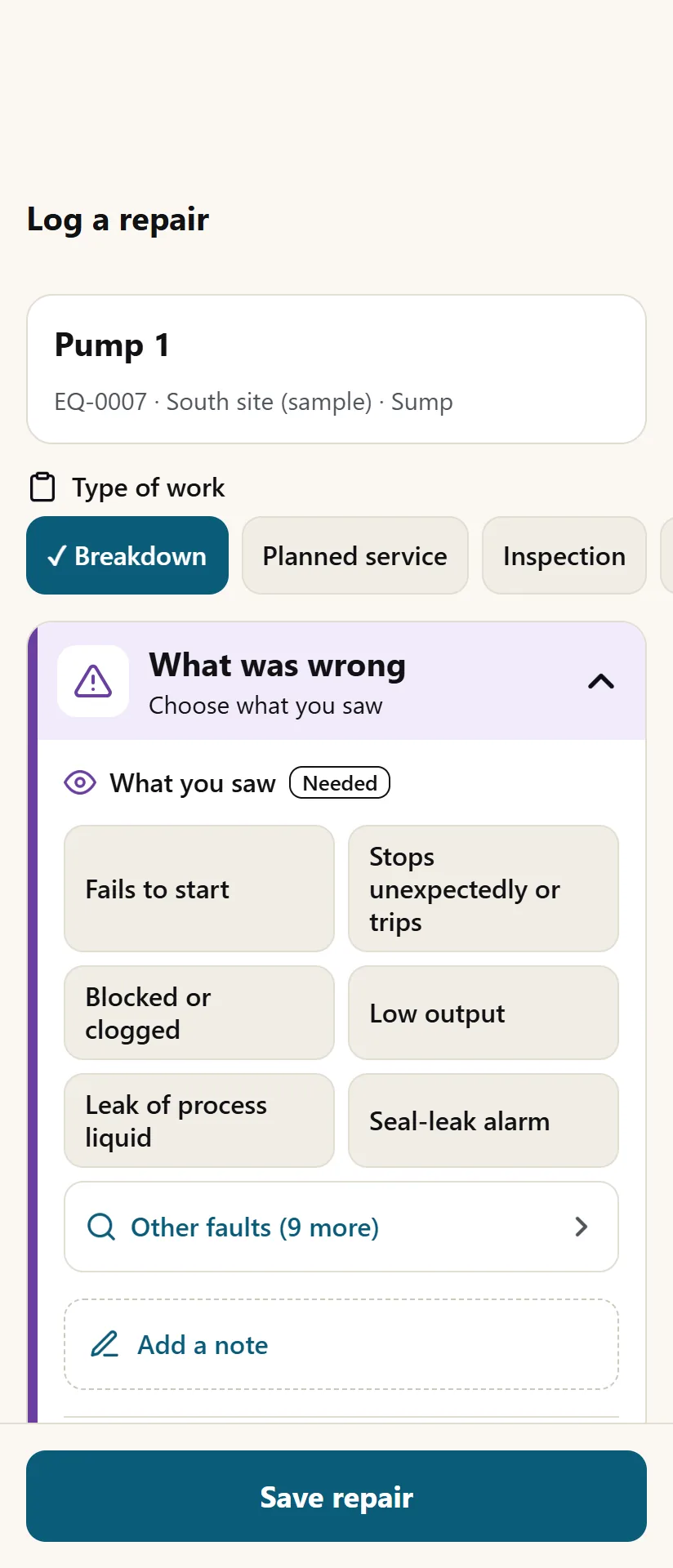
The repair form for the same machine. A demo we built, on invented sample data. Not a client’s system. Know which parts to reorder
Each spare part has a minimum, worked out by a fixed formula from the parts used in past jobs and the supplier’s lead time. Parts below their minimum are listed first, with the working shown under each one.
Our own product, captured 13/11/2026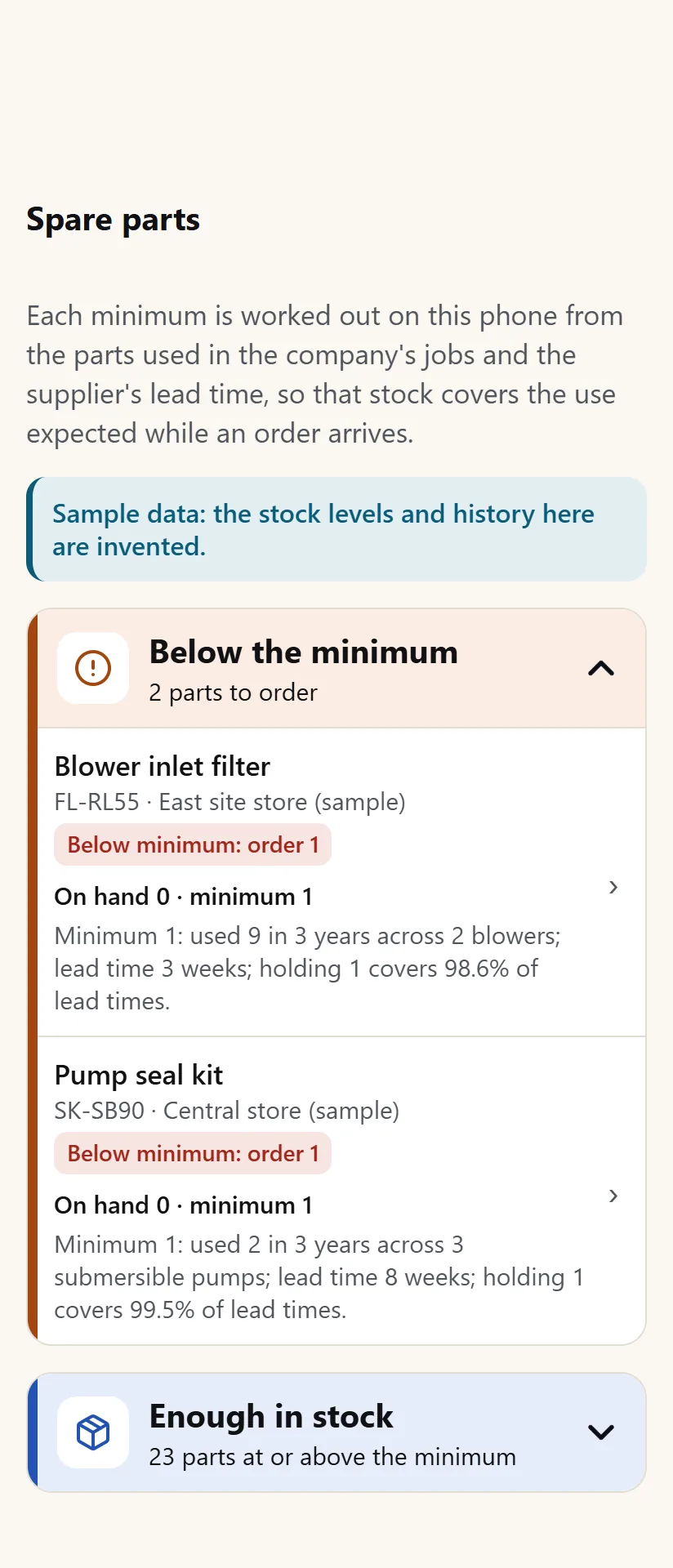
Spare parts, with two below their minimum. A demo we built, on invented sample data. Not a client’s system.
What it is, and what it is not
It is an example of the kind of small software we build, not a product sold off the shelf. A version for your site would start from your own equipment, your own forms and the system you already use, and sometimes the better answer is to set that system up properly instead.
It starts the way all our work does: a free call about one task, then a Scoping Sprint that says in writing what is worth building and what is not. How it starts.
Start with one task.
The first call is with the founder, Pouyesh Izady: thirty minutes, free, about one task at your site that is still done by hand.
Or write to hello@tarnua.ie